
On December 5, 1926, Claude Monet died in Giverny at the age of 86. A century later, his work continues to fascinate and inspire artists, researchers, and art lovers. From his early paintings in Normandy to the famous Water Lilies, we look back at the career of an artist who profoundly changed our perspective on landscape.
Claude Monet, an artist deeply attached to Normandy
Born in Paris in 1840, Claude Monet grew up in Le Havre, where he discovered drawing at a very young age and developed his taste for painting. It was in Normandy that he met Eugène Boudin, who encouraged him to paint outdoors and to observe the variations of the sky and landscapes.
This practice became one of the cornerstones of his artistic approach. During his stays, Monet explored the landscapes of Normandy: the coasts of Étretat, the ports, the countryside, and the towns. He found motifs there that he constantly revisited, at different times of day and in changing weather conditions.
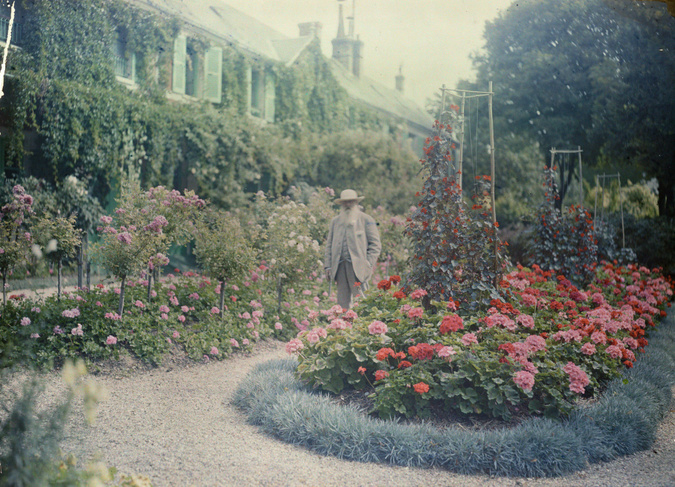
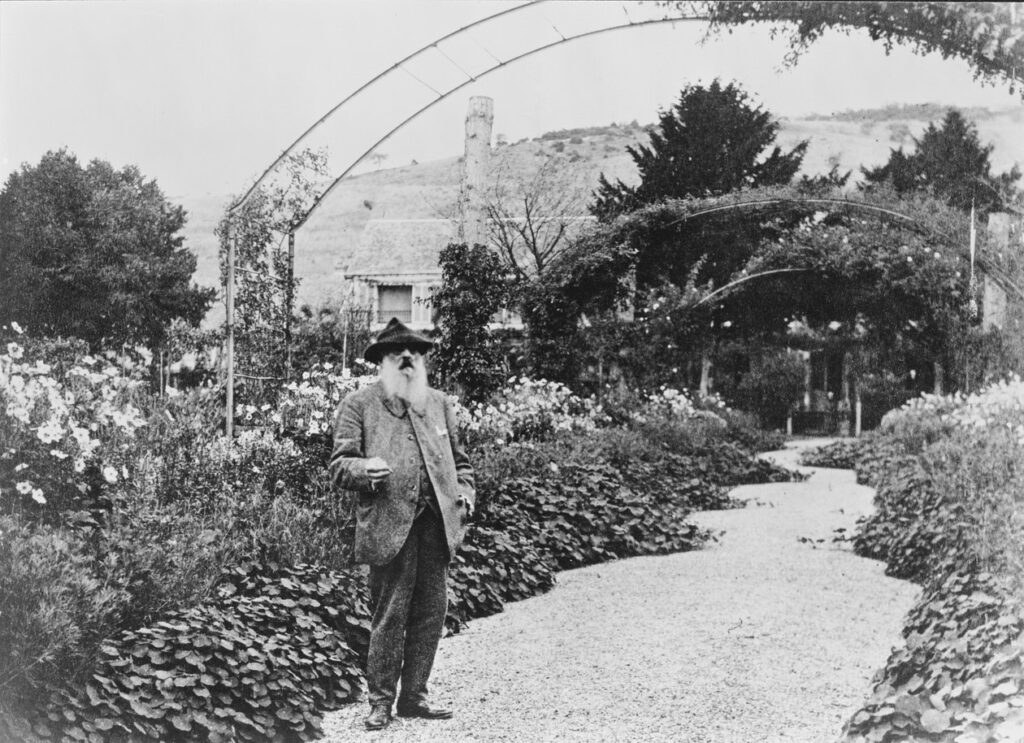
In 1883, he settled in Giverny, in the Eure region, where he lived until his death. There, he gradually created a water garden and a flower garden, which became true subjects of his artistic creation. This place, which he shaped over the years, occupies a central place in his work.
A work that transforms our view of the landscape
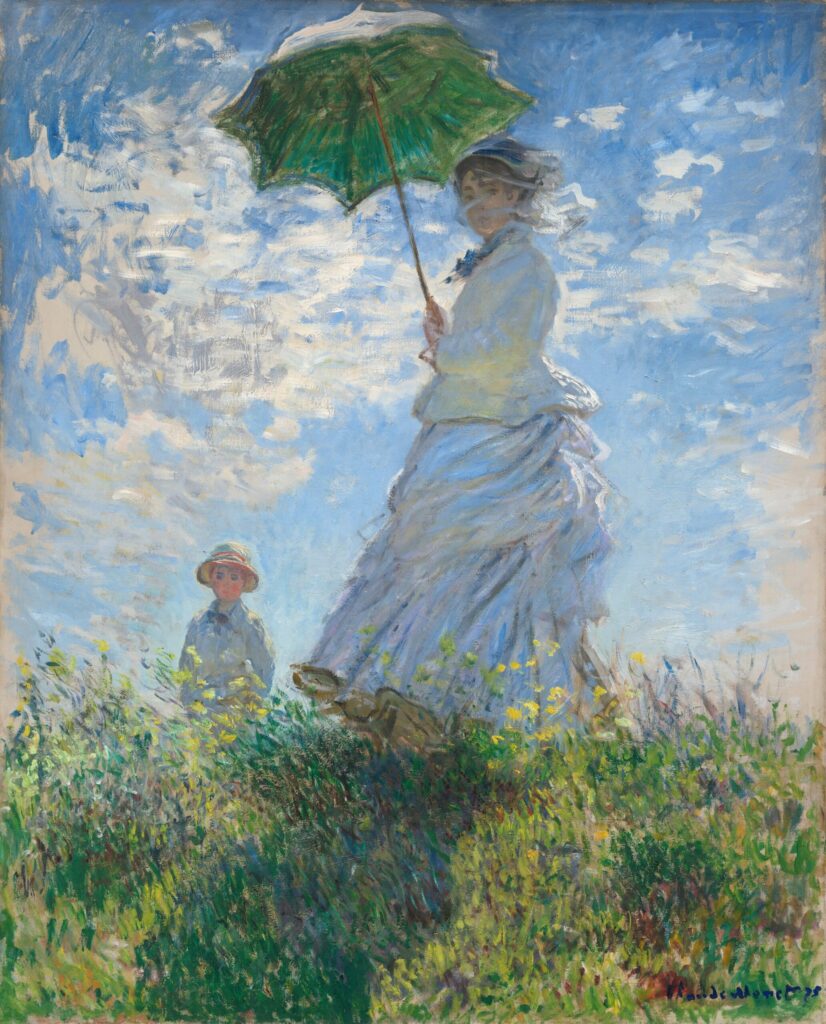
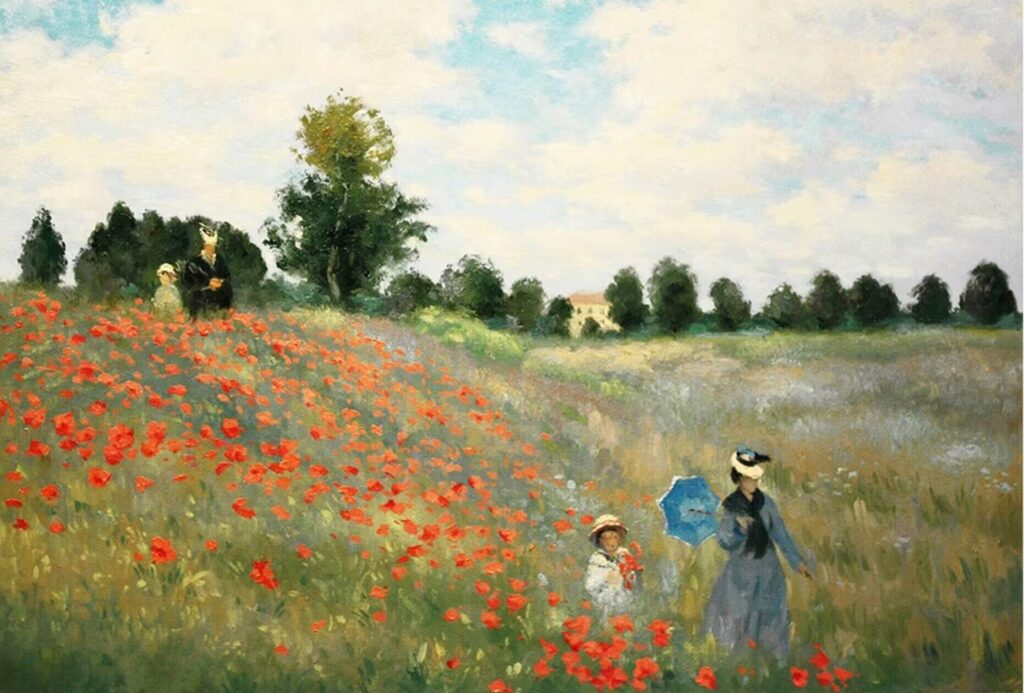
Claude Monet is one of the major figures of Impressionism, a movement whose name is associated with his painting Impression, Sunrise, presented in 1874. By favouring plein air painting, atmospheric effects and variations in perception, he renewed the codes of landscape representation.
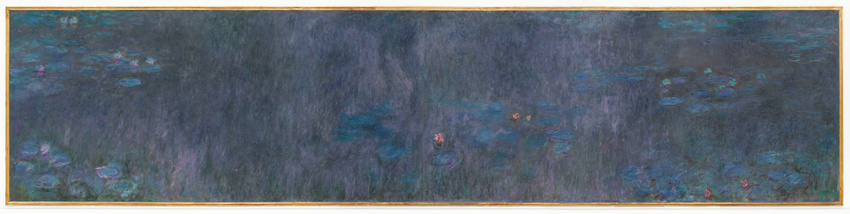
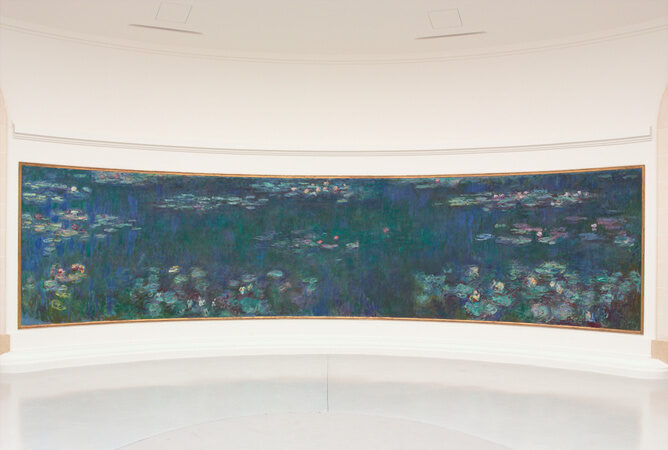
Throughout his career, he returned to the same motifs to capture their transformations: Haystacks ,Poplars ,Rouen Cathedral , and Water Lilies. This exploration culminated in the large compositions dedicated to his garden at Giverny, some of which are now on display at the Musée de l'Orangerie in Paris.
With nearly 250 paintings dedicated to water lilies, this series testifies to the breadth of his work and his enduring interest in the possibilities offered by painting. His work continues to inspire contemporary art and to question our relationship with the landscape.


Normandy Impressionist 2026: a contemporary tribute to Claude Monet
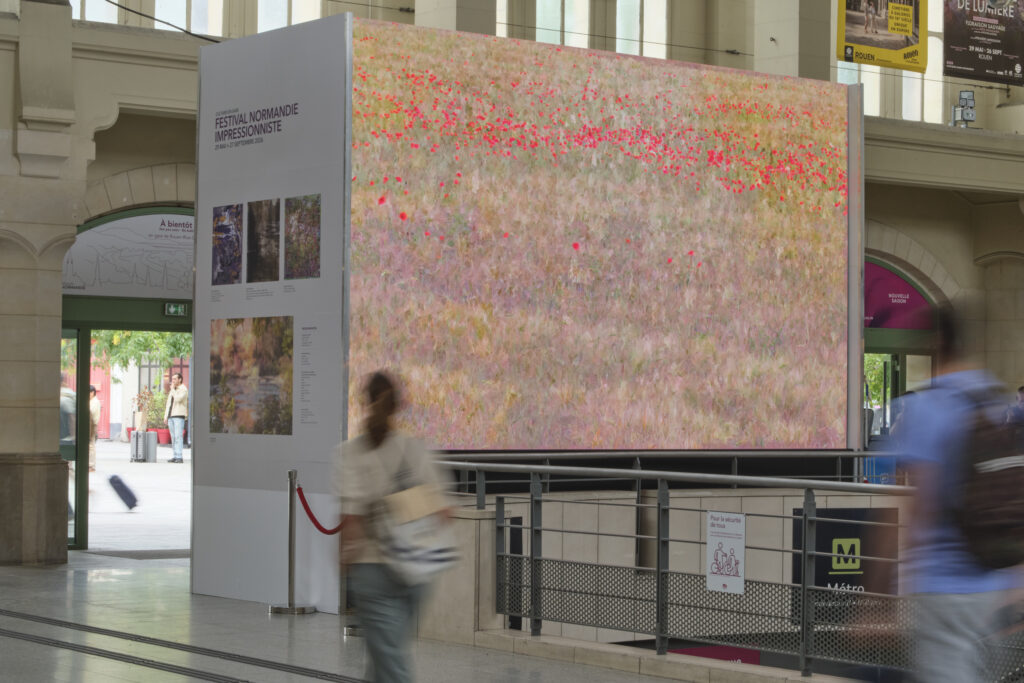
To mark the centenary of Claude Monet's death, the 6th edition of the Normandy Impressionist Festival paid tribute to the painter with a contemporary program themed " A Possible Garden." This theme echoes the garden at Giverny, conceived by Monet as a true work of art and which became one of his principal subjects of creation.
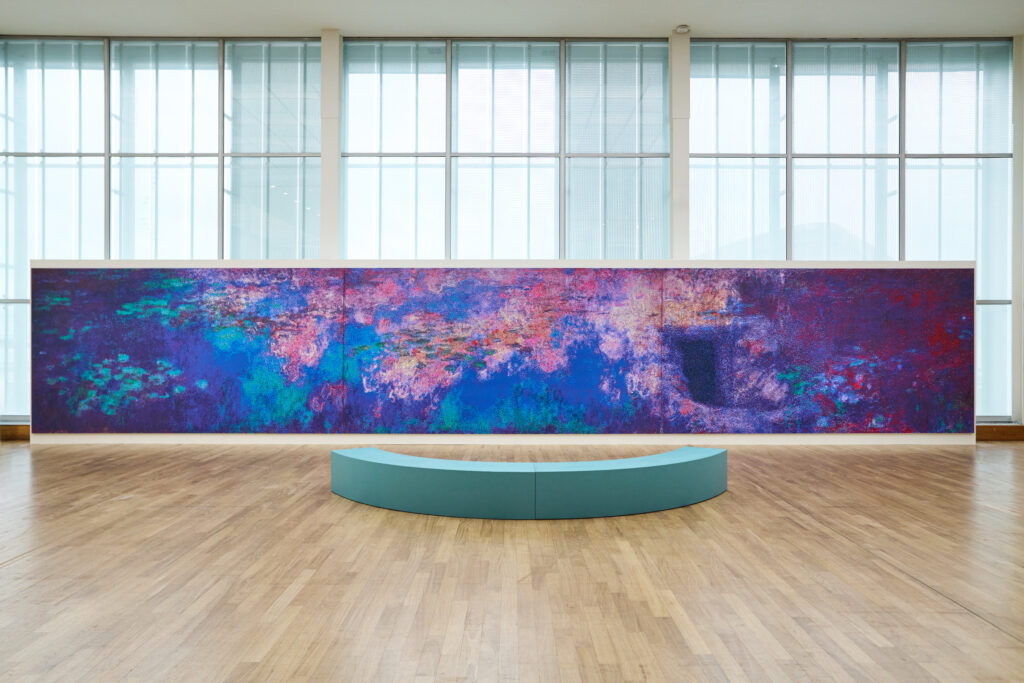
Several artists have directly revisited his world. At the MuMa in Le Havre, Ai Weiwei reinterpreted the famous Water Lilies in a monumental installation made of LEGO® bricks, presented for the first time in France. In Vernon, Lionel Sabatté created La mémoire du limon (The Memory of Silt), a tribute to Claude Monet, using silt collected from the Water Lilies pond at Giverny, which he transformed into pigment for his creations.
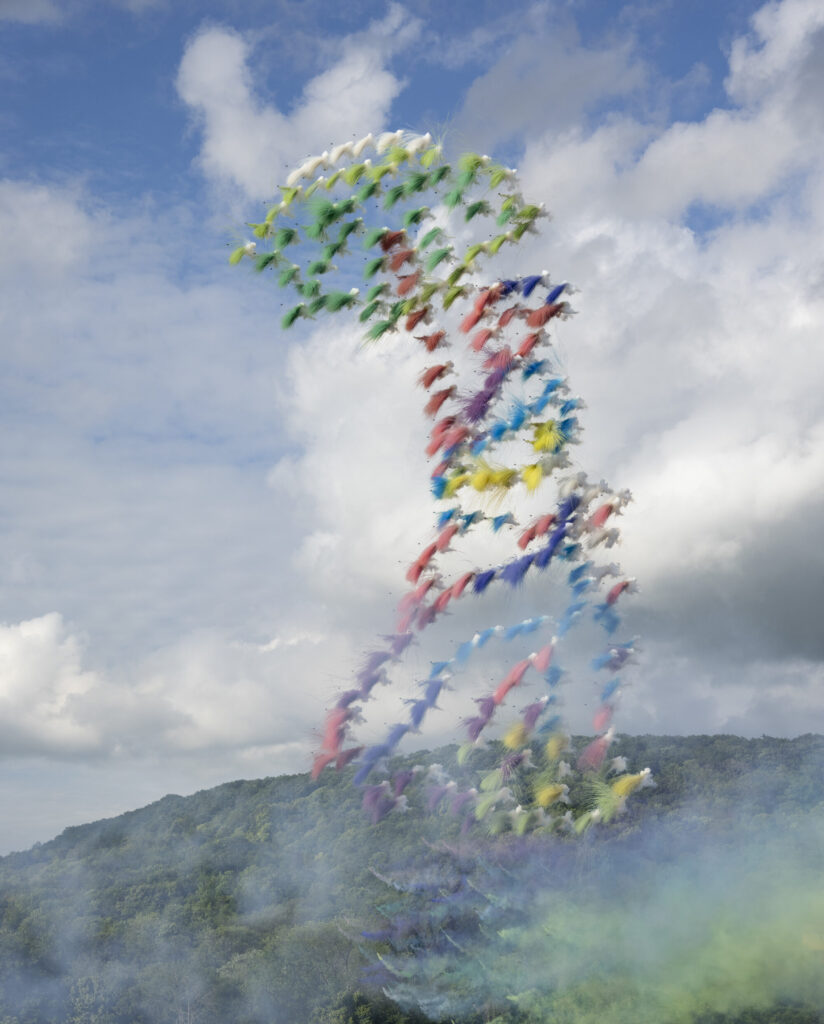
Other projects extended the painter's exploration of landscape and natural phenomena. At the Jardin des Personnalités in Honfleur, Fujiko Nakaya transformed the space with Fog Tree, a fog sculpture that alters our perception of the environment. Through these works, the artists, in turn, explored the connections between art, nature, and living beings.
With 75 projects across 43 towns in Normandy, the festival fostered a dialogue between the Impressionist legacy and contemporary art. A century after his death, Claude Monet continues to inspire artists and open up new ways of looking at the landscape.
The centenary celebrated in museums and cultural venues
To mark this anniversary, several exhibitions dedicated to Claude Monet and his legacy are still to be discovered in Normandy and Paris.
- In Normandy, the Rouen Museum of Fine Arts presents Claude Monet, Cathedral out of frame!From November 7, 2026 to March 8, 2027. This exhibition-dossier offers the opportunity to discover The Gate and the Albane Tower, grey weather without its frame, and invites us to take a fresh look at the materiality of this iconic work.
- In Vernon, at the Blanche Hoschedé-Monet Museum, the artist Lionel Sabatté presents The Memory of Silt, a tribute to Claude Monet, until December 23, 2026. For this contemporary creation, he notably uses materials from the Water Lilies pond in Giverny, establishing a direct link with the garden imagined by the painter.
- In Paris, the Orangerie museum is dedicating an exhibition to the temporal dimension of his work with Monet, painting time, on display until January 25, 2027.
- The Marmottan Monet Museum, for its part, explores the evolution of landscape painting and Monet's influence on 20th and 21st century artists with Stories of Landscapes: From Monet to Hockney (1893-2026), until January 31, 2027.
- Finally, the Musée d'Orsay offers a tour focusing on five Monet paintings that have recently been studied or restored, under the title I spend my life painting, to be discovered until January 24, 2027.
These are all opportunities to rediscover the work of Claude Monet, his relationship to the landscape and the influence he continues to exert on artistic creation.
Events not to be missed
Several events are being organized to mark the centenary:
- In Giverny, the Museum of Impressionism will exceptionally open its doors on Saturday, December 5th, from 2 pm to 6 pm to present an exhibition of works and period documents retracing the links between the painter and the village. At 2 pm, a concert will be held Dances Ravel's concert will bring together the Quatuor Les Debussy(s), the Ezékiel collective and Franck Tortiller (full concert).
- On December 8th, at the MuMa in Le Havre, Sylvie Patry, chief curator of heritage, will give a lecture devoted to the painter's final years and the creation of.. Water lilies (full conference).
- On December 9th, the Ferme Saint-Siméon in Honfleur is offering a dinner-conference entitled Claude Monet, at the tablewith chef Matthieu Pouleur and Philippe Piguet, great-grandson of the painter.
- Finally, on December 11, the Petit Palais in Paris is organizing a two-voice reading of the correspondence between Monet and Georges Clemenceau, in front of the painting Sunset over the Seine at Lavacourt. Winter effect (1880).
To extend this tribute, the ARTE program 28 minutes also offers an exchange about Monet's legacy, with Sylvie Patry and the artist Julien des Monstiers, who participated in the 6th edition of the Normandy Impressionist Festival with his exhibition Sun, rose, orange, red presented at the Eugène Boudin museum in Honfleur.